
Tesla-Approved vs. Tesla-Certified Body Shop: What the Labels Really Mean
Tesla approved body shop or Tesla certified? Learn what Tesla's approval program means, how to verify a shop on Tesla's locator, and what to ask before repairs.
After a crash, most Tesla owners search for a "Tesla certified body shop." Then they find shops calling themselves Tesla-approved, Tesla-trained or Tesla-recommended, and it gets confusing fast. The label that lines up with Tesla's own program is a Tesla approved body shop: an independent shop Tesla has approved to repair its vehicles as part of its collision repair network.
This article explains what that approval generally involves, how to check a shop's status yourself, and why it matters for the repair. If you want the bigger picture first, including towing, claims, parts and calibration, start with our complete guide to Tesla collision repair and choosing a Tesla body shop.
Key takeaways
- "Tesla certified body shop" is how people search. Tesla's own program language is about approved body shops.
- Approval generally means Tesla-specific training, the right equipment, and access to Tesla's repair procedures and parts.
- You can verify a shop in the body shop locator on Tesla's website, then confirm with the shop directly.
- A shop's own claims in an ad aren't verification. Tesla's listing is.
- For warranty questions, check with Tesla and your warranty terms instead of relying on what any shop tells you.
Is a Tesla approved body shop the same as a Tesla certified body shop?
In everyday use, people mean the same thing. "Tesla certified body shop" is the common search phrase, but Tesla's program is built around approved body shops in its collision repair network. The test that matters is whether Tesla lists the shop as approved, whatever word the shop uses in its ads.
The confusion is understandable. Many carmakers run "certified collision repair" programs, so drivers assume Tesla does the same under the same name. Some shops lean into that and use "certified" loosely in their marketing. Others say "Tesla-trained" because a technician took a class, even though the shop isn't approved.
Here's how the common labels compare:
| Label you might see | What it usually means | How to check |
|---|---|---|
| Tesla-approved body shop | Tesla has approved the shop to repair its vehicles as part of its collision repair network | Body shop locator on Tesla's website |
| "Tesla certified" | Usually a loose way of saying the same thing, though some shops use it without Tesla approval | Look the shop up on Tesla's locator |
| "Tesla-trained" | Someone at the shop took Tesla-related training | Ask what training, and whether the shop is approved |
| Tesla Collision Center | A collision repair facility run by Tesla itself | Tesla's website |
What Tesla approval generally involves
Tesla sets its own requirements for approved shops and can change them over time, so we won't list specific numbers. In general terms, approval covers four areas.
Training
Technicians complete training on how Tesla vehicles are built and repaired. That includes aluminum and mixed-material repair, structural repair methods, and high-voltage safety for working around the battery. Approved shops are expected to keep that training current as Tesla adds new models and updates procedures. General industry training matters too, which is why many approved shops also invest in I-CAR certified technicians.
Equipment
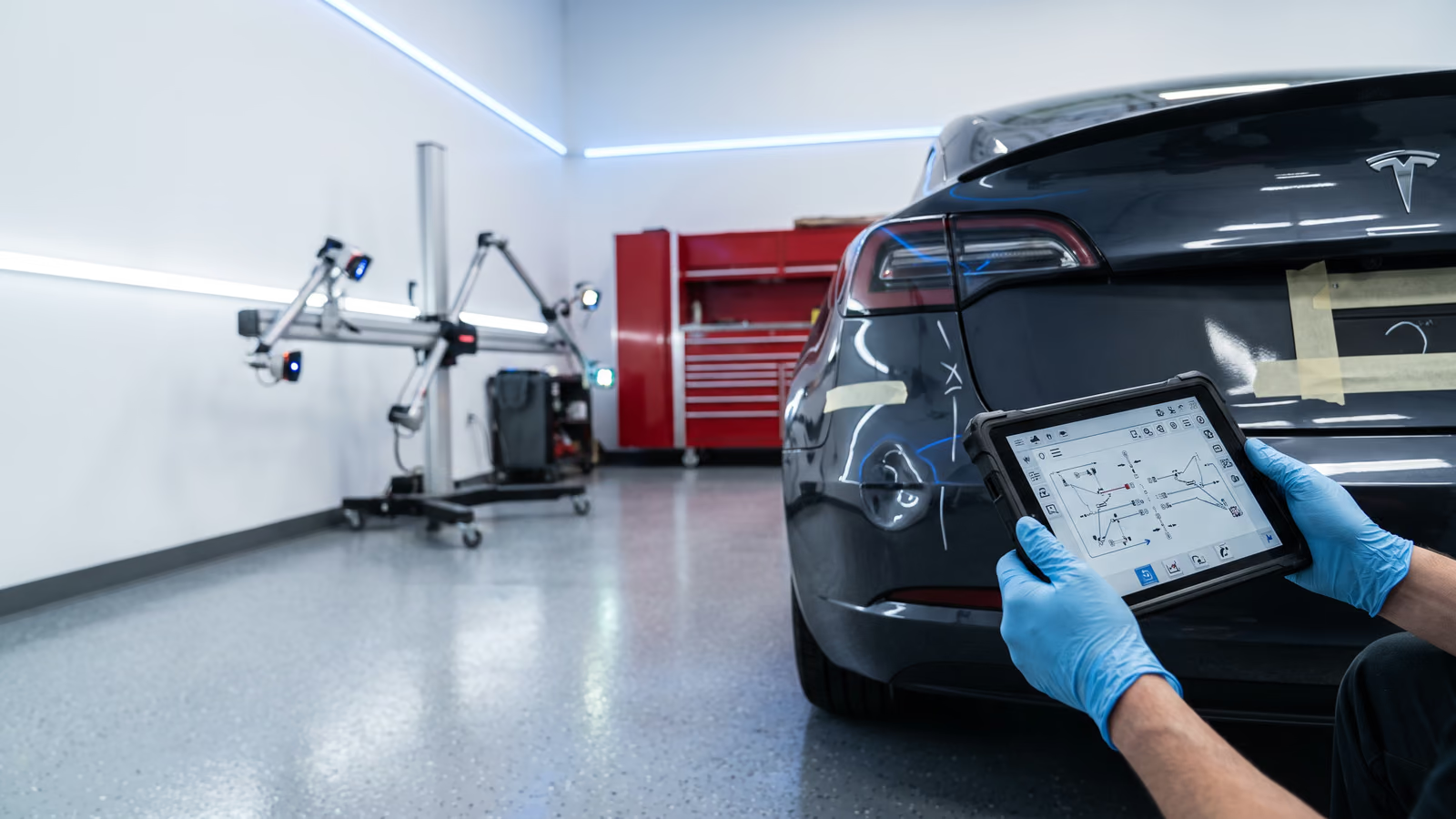
Tesla repairs call for specific tools: riveting and bonding equipment, welders suited to the metals involved, and accurate measuring systems for structural damage. Because aluminum and steel shouldn't share tools, shops need dedicated aluminum equipment and a separate work area. Our article on aluminum body repair for Teslas, EVs and trucks explains why that separation matters.
Access to repair procedures and parts
Approved shops work from Tesla's repair procedures. Those procedures spell out what can be repaired, where panels can be sectioned, which joining methods to use, and what calibration is needed afterward. Approved shops also order parts through Tesla, which matters for structural and safety-related parts.
Facility and process standards
Programs like this generally look at how a shop runs as well as what tools it owns. That can include how the shop documents repairs and whether it can handle the full job, from teardown through calibration and final checks.
How to verify a Tesla approved body shop
Don't take a shop's word for it, including ours. Checking takes a few minutes.
- Use Tesla's body shop locator. Tesla's website has a locator for its collision repair network. Search your area, such as Sacramento or Roseville, and see which shops come up.
- Match the details. Make sure the name and address on Tesla's listing match the shop you're talking to. Shops with similar names exist.
- Ask the shop directly. A real Tesla-approved shop will confirm it without hesitation and can explain what that approval covers.
- Ask about your type of repair. If your damage is structural or involves aluminum, ask whether the shop does that kind of work on your model.
- Ask how current it is. Approval programs expect shops to keep training and equipment up to date. Ask whether the shop's approval is current today.
If a shop can't point to a Tesla listing and keeps saying "certified" without explaining what that means, keep looking.
Why Tesla approval matters for your repair
A Tesla isn't built like most cars on the road. Approval matters because it ties the repair to how Tesla designed the car.
Repair quality. Approved shops follow Tesla's procedures instead of guessing. On a car with aluminum structure, large castings and bonded joints, guessing can leave a car that looks fine but doesn't protect you the way it should in a second crash.
The right parts. Tesla parts ordered through Tesla fit the way the car was designed. That's especially important for structural and safety-related parts.
Cameras and sensors. Tesla's driver-assist features rely on cameras and, on some models, other sensors. An approved shop knows what calibration Tesla requires after the repair and confirms it's finished.
Resale and records. A documented repair done to Tesla's procedures is easier to explain to a future buyer than a repair with no paper trail.
What about the Tesla warranty?
This is where you need to be careful about what anyone tells you, including body shops. Collision damage itself generally isn't covered by a new-vehicle warranty. How a collision repair affects warranty coverage on related parts is a question for Tesla and your warranty terms.
We won't tell you that using a shop without Tesla approval automatically voids anything. What we will say is that a repair done to Tesla's procedures, with Tesla parts and full documentation, gives you a clear record if a warranty question ever comes up. Ask Tesla directly if you're unsure.
Questions to ask any shop that calls itself Tesla certified
Bring this list when you call:
- Are you listed in the body shop locator on Tesla's website?
- Does your approval cover the repair my car needs, including structural or aluminum work?
- Do you order parts through Tesla?
- Who handles camera and sensor calibration, and how do you confirm it's done?
- Do you have a separate aluminum repair area?
- Will you work with my insurer and handle supplements for hidden damage?
- What warranty comes with the repair, and is it in writing?
For a broader checklist that works for any vehicle, see how to choose a reliable collision repair shop.
Your insurer and your choice of shop
Your insurer may have its own list of preferred shops, and a Tesla-approved shop may or may not be on it. In California, the choice is still yours. Under California Insurance Code §758.5, an insurer can't require you to use a specific shop and can only suggest one after telling you that you have the right to choose. Our guide on whether your insurance company can choose your body shop covers this in more detail.
Where Pro Collision Center fits
Pro Collision Center is a Tesla-approved body shop in Sacramento. We repair the Model 3, Model Y, Model S, Model X and Cybertruck, including aluminum and structural repairs, and we recalibrate cameras and sensors after the work is done. Our technicians are I-CAR certified, we follow OEM repair procedures, and we work with all major insurance companies. We also offer auto body repair for every other make in the household.
Frequently Asked Questions
Does Tesla certify body shops?
Tesla's program language is about approved body shops that are part of its collision repair network. Many people say "Tesla certified" when they mean the same thing. The way to confirm a shop's status is the body shop locator on Tesla's website.
How do I find a Tesla approved body shop near me?
Use the body shop locator on Tesla's website and search your city or ZIP code. Then call the shop to confirm its approval is current and covers the type of repair your car needs.
Does using a non-approved body shop void my Tesla warranty?
Don't rely on a body shop's answer to this question. Collision damage generally isn't covered by a new-vehicle warranty, and how a repair affects coverage on related parts depends on Tesla's warranty terms. Ask Tesla directly about your situation.
Can my insurance company make me use their shop instead of a Tesla-approved shop?
Not in California. Insurance Code §758.5 says an insurer can't require you to use a specific repair shop. It can suggest one only after telling you that you have the right to choose.
Is a Tesla Collision Center better than a Tesla-approved body shop?
Both work from Tesla's repair procedures. Tesla Collision Centers are run by Tesla, while approved shops are independent businesses in Tesla's network. Location, scheduling and how well the shop communicates are usually what decide it.
If you need a Tesla approved body shop in Sacramento, Roseville, Citrus Heights or Antelope, we're glad to look at your car. We offer free estimates, free towing to our shop and up to $1,000 in insurance deductible assistance for qualifying repairs. Call (916) 885-1010, Monday through Friday from 7 am to 5 pm, or book a free Tesla collision repair estimate.
Whether you need collision repair, paint restoration, or just a quick quote — we’re here to help. Fill out the form and a team member will reach out promptly to confirm your appointment.