Rear Bumper Repair vs. Replacement and the Full Cost
A rear bumper can look fine while retainers, the absorber or trunk fit are damaged. Learn how to compare repair and replacement on the full inspected scope.
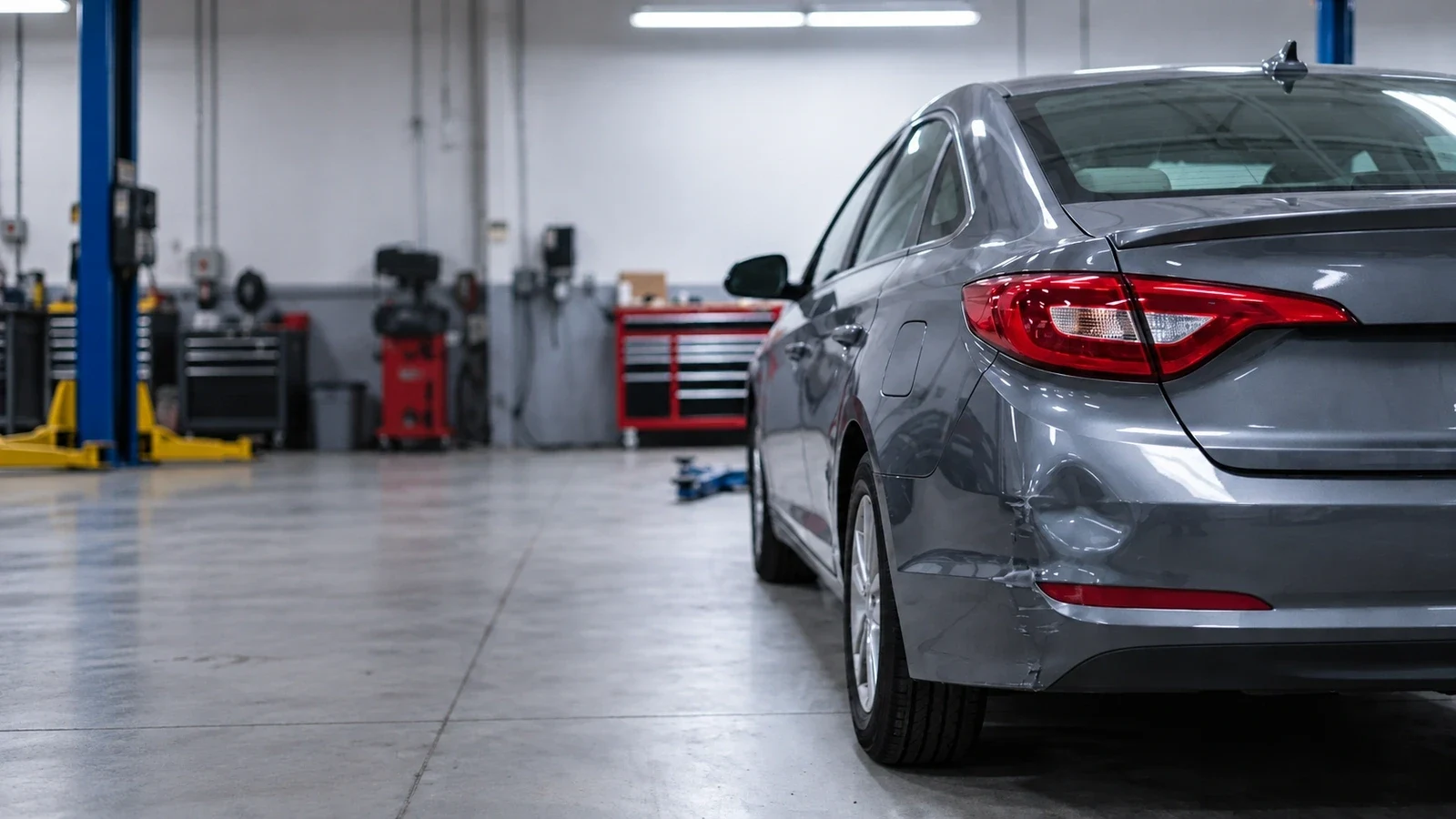
A rear bumper can spring back after an impact while its retainers or the parts behind it remain damaged. That is why the price of a replacement cover tells you little about the finished job. The useful comparison is between complete repair options after the rear assembly has been inspected.
How does back bumper replacement cost compare with repairing the cover?
Repairing a suitable dent or paint defect avoids buying a new cover, but it still needs access, preparation and any required refinishing. Replacement adds the correct cover and transfer of reusable equipment. A cover-only purchase is not an installed repair.
Hypothetical Sacramento example, October 14, 2026: a 2019 Honda Civic with one rear-cover dent, damaged paint and intact underlying components. The figures below are assumed arithmetic inputs, not supplier prices or Pro Collision Center rates. The replacement option assumes a new OEM cover.
Taxes, concealed damage, trunk work and sensor procedures are excluded. If the exact vehicle or repair needs electronic checks, add them to both applicable scopes before comparing.
What hidden damage can a rear impact leave behind the bumper?
Inspection should follow the impact through the assembly. Retainers may crack, the absorber may compress, the reinforcement may deform, and wiring or sensor supports may move. None of these findings is ruled out by a cover that looks nearly normal.
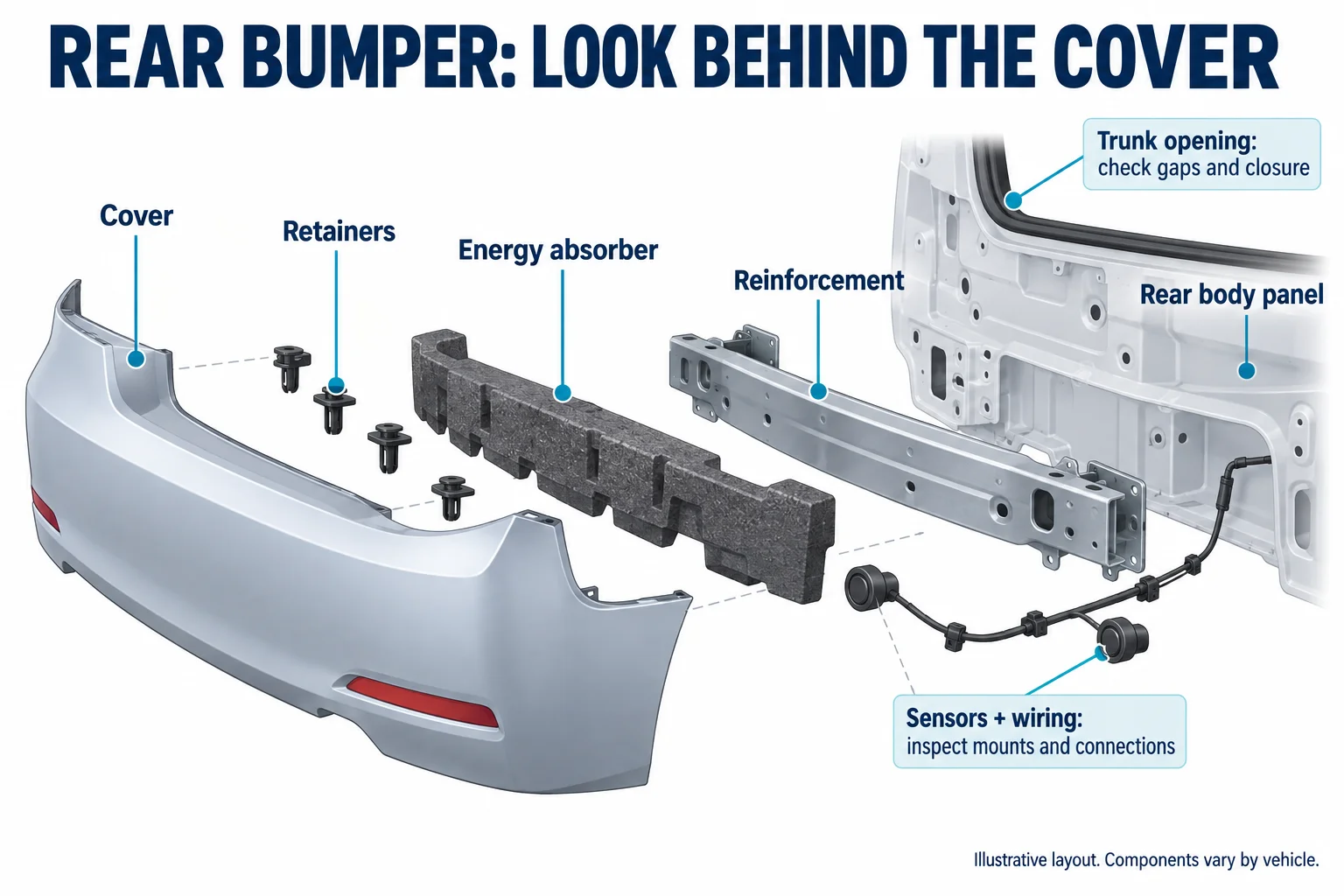
A trunk or tailgate that suddenly needs extra force to close deserves assessment of the opening, latch relationship and surrounding rear body. Do not assume its problem will disappear when the cover is replaced.
Removal should be authorized and its terms explained first. Photographs of concealed findings help distinguish accident-related work from an unrelated cosmetic concern. The illustration shows common components, not the exact arrangement on every vehicle.
When can a rear bumper dent or paint defect be repaired?
A broad, recoverable distortion differs from plastic that has stretched, torn or lost its mounting shape. The coating also matters: fractured paint may require refinishing even if the cover can be reshaped.
3M distinguishes surface defects from through-cracks, which can require different repair approaches. However, repair-material instructions do not override the vehicle maker. Ford's ADAS bumper policy is one example of a restriction that can prevent a plastic repair otherwise possible in a nonsensor application.
What should you check before accepting a rear bumper estimate?
Check the complete proposal before deciding from its total:
- Confirm cover repair or replacement and the origin and condition of any replacement part.
- Identify removal, refinishing, clips and trim transfer.
- Ask whether trunk fit, the rear body or underlying impact components need work.
- Confirm any required sensor checks and how their results will be documented.
- Review exclusions and how newly discovered damage will be authorized.
At pickup, check even gaps, secure attachments and normal trunk operation with the shop. Look at the finish in suitable light and ask for records of required electronic checks. A tidy exterior is one part of handover, not evidence that every concealed component passed inspection.
California BAR's consumer repair guidance explains the importance of an estimate and authorization before repairs.
Where can you get a rear bumper damage assessment in Sacramento?
At Pro Collision Center, our rear bumper repair in Sacramento covers rear-impact assessment, attachment and component repairs, refinishing and relevant parking-sensor checks.
- Photograph the rear of the vehicle and both bumper corners.
- Tell us how the impact happened and whether the trunk closes differently.
- Mention new warning lights, unusual parking alerts, loose parts or water entry.
- Bring any existing insurer estimate to the inspection.
- Review the inspected scope and the final fit and function checks with our team.
Do not force a misaligned trunk shut or keep pushing a loose cover back into place. Those symptoms help identify what needs inspection. Request a free estimate so we can discuss the next step for your vehicle.
Conclusion: How can you avoid overlooking costs behind a damaged rear bumper?
The lowest visible-cover price can leave the largest unanswered question: what happened behind it? Our recommendation is to resolve the concealed scope and trunk fit before choosing between a repair and a replacement.
Use the inspected estimate as your comparison point. Keep handover records so a later fit or sensor concern can be discussed against the work actually performed.
Sources
Whether you need collision repair, paint restoration, or just a quick quote — we’re here to help. Fill out the form and a team member will reach out promptly to confirm your appointment.