
Frame Damage: Signs, Repair Costs, and When It Totals a Car
Frame damage can hide after a crash. See the warning signs, how shops measure and fix a car frame, typical repair costs, and when it totals a car in California.
A crash can bend more than the parts you can see. Frame damage is damage to the structure that holds your car together and protects you in a collision, and it often hides behind a bumper or fender that looks almost fine. You might have a small dent from a rear-end tap on I-80 while the metal behind it has shifted out of place.
This guide explains what a car frame is on a modern vehicle, the warning signs to look for, how shops measure and repair structural damage, what it typically costs, and when frame damage leads to a total loss in California.
Key takeaways
- Most cars and crossovers built today are unibody, so "frame damage" usually means damage to structural parts like rails, pillars and aprons.
- Many signs are subtle: uneven panel gaps, doors that stick, pulling, odd tire wear or new warning lights.
- Only a computerized measurement against the manufacturer's specifications can confirm or rule out frame damage.
- Most frame damage can be fixed. Whether your car is totaled depends on repair cost versus the car's value, not a fixed rule.
- A correct repair restores safety, but frame damage can still lower resale value, so keep every repair record.
What Is Frame Damage?
Frame damage is any bend, kink, crack or shift in the structural parts that hold a car together, such as frame rails, pillars, aprons and floor pans. It changes the car's factory dimensions, which can affect alignment, how panels fit and how the car protects you in a future crash.
The term comes from older vehicles with a separate steel frame under the body. Most cars on Sacramento roads aren't built that way anymore.
Body-on-frame vs. unibody: which car frame do you have?
| Body-on-frame | Unibody | |
|---|---|---|
| How it's built | A separate ladder-style frame, with the body bolted on top | The body and frame are one welded structure |
| Common examples | Most full-size pickups (Ford F-150, Chevy Silverado) and some large SUVs (Chevy Tahoe, Toyota 4Runner) | Nearly all sedans, crossovers, minivans and EVs, including the Tesla Model 3 and Model Y |
| What "frame damage" means | Bends, twists or cracks in the separate frame rails | Damage to any structural part of the body shell |
| Typical repair approach | Straighten or replace frame sections | Unibody repair: measure, pull, then section or replace structural panels per factory procedures |
On a unibody vehicle, crumple zones at the front and rear are designed to fold so the cabin doesn't. That's why a hit that seems minor can still push a rail or apron out of position.
Materials matter too. Many newer trucks and EVs use aluminum or ultra-high-strength steel, which need different tools and training. See our guide to aluminum body repair for EVs and modern trucks.
What counts as structural damage
Insurance adjusters, body shops and vehicle history reports often say "structural damage" instead of "frame damage." On a typical unibody car, structural parts include:
- Front and rear frame rails, including the rail tips (the first part to crush)
- Strut towers and inner fender aprons
- A, B and C pillars (the posts that hold up the roof)
- Rocker panels under the doors
- Floor pans and the trunk floor
- Roof rails and the rear body panel
- On many vehicles, the radiator core support (on some it's a bolted part and isn't considered structural)
A cracked bumper cover or dented door skin isn't structural. A bent bumper reinforcement bar usually isn't either, but it's a clue that energy traveled further in.
How to Tell If Your Car Has Frame Damage
You can't confirm frame damage by eye, but you can spot the warning signs. Look for any of these after a collision:
- Uneven panel gaps. Compare the gap between the hood and each fender, the doors and fenders, and the trunk or liftgate and the quarter panels. One side wider than the other is a red flag.
- Doors, hood or trunk that don't close right. A door that now needs a slam, or a hood that won't latch on the first try.
- Pulling or an off-center steering wheel. Especially if it continues after a wheel alignment.
- Uneven or fast tire wear. A shifted suspension mounting point can wear one edge of a tire quickly.
- New noises. Creaks over bumps, rattles, or new wind noise around a door.
- Visible kinks or wrinkles. Look in the engine bay, trunk floor, door jambs and underneath. Cracked paint or cracked seam sealer along a joint is a common clue.
- Crumple zone damage. A crushed rail tip or bent reinforcement bar behind the bumper means the structure took part of the hit.
- A wheel that looks pushed back in its wheel well, or one corner of the car sitting lower than the others.
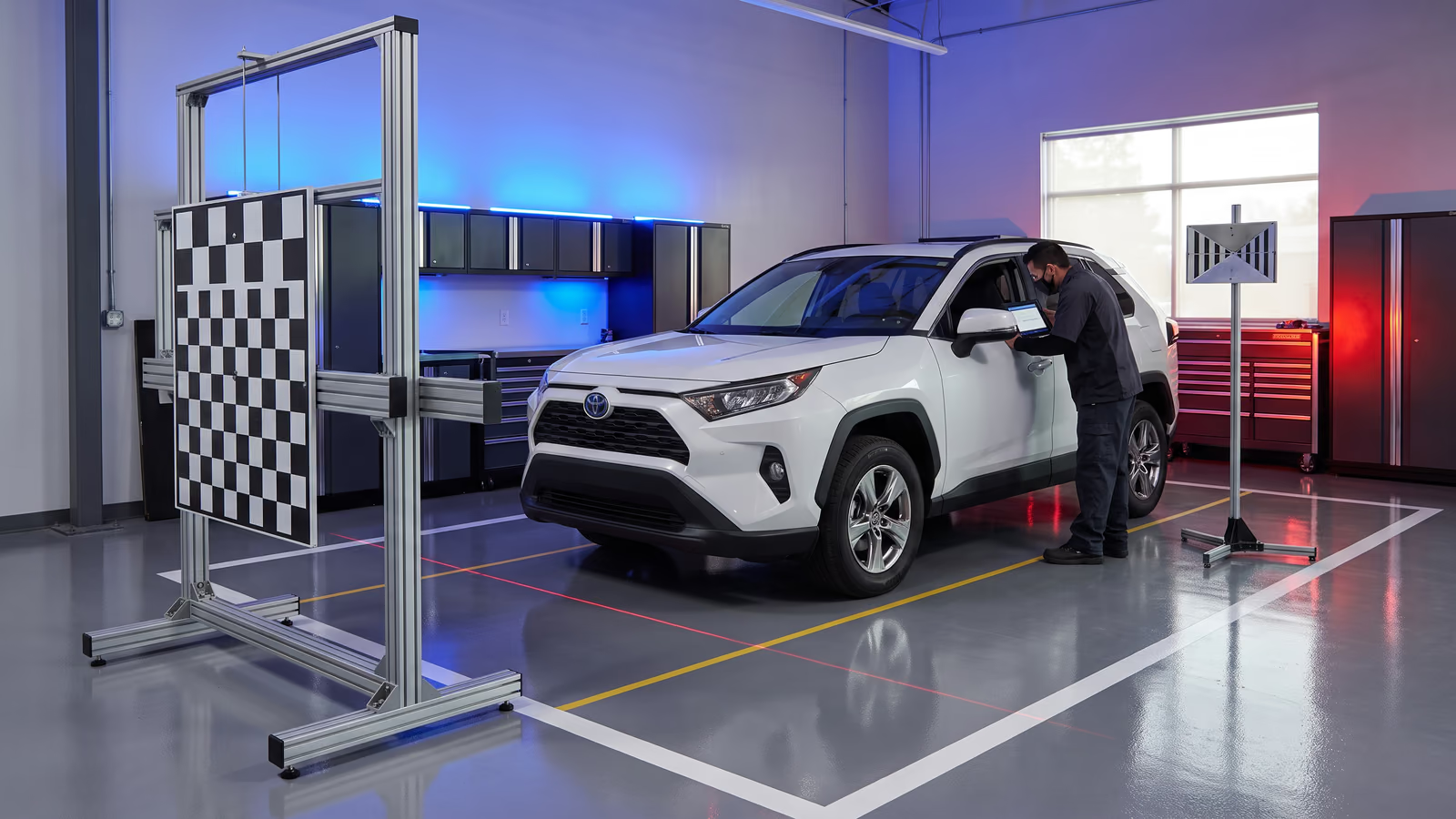
- Warning lights or sensor problems. Cameras and radar are aimed relative to the body. If lane keeping, adaptive cruise or blind-spot alerts act strangely after a crash, the structure or the sensor mounts may have moved. Read more about ADAS calibration after a collision.
What to photograph before the car goes in
Good photos help your claim and the shop. On level ground, photograph:
- All four corners of the car, from about 10 feet back
- Close-ups of every panel gap around the damaged area, and the same gaps on the undamaged side
- Each wheel from the side, showing its position in the wheel well
- Door jambs, under the hood and inside the trunk near the impact
- Your dashboard with the car running, showing any warning lights
Then open and close every door, the hood and the trunk, and note anything that feels off.
How Shops Diagnose Frame Damage
A visual inspection is only the starting point. Structural damage is measured in millimeters, so a proper diagnosis usually works like this:
- Pre-repair scan. A scan tool checks every computer module for stored fault codes, including codes from safety sensors that don't always light up the dash.
- Teardown. The bumper and damaged panels come off so the technician can see rails, brackets and supports.
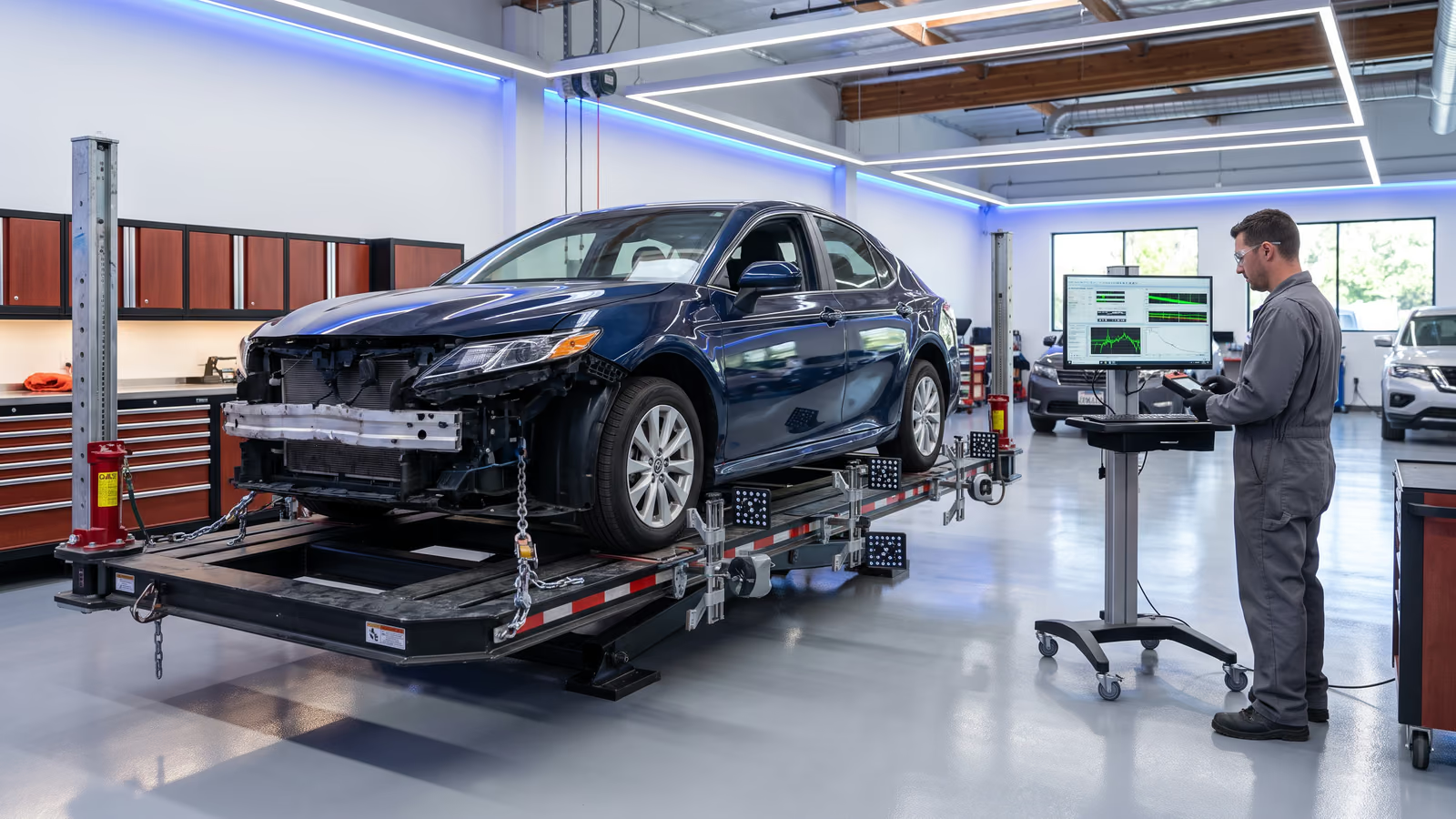
- Computerized measuring. A 3D measuring system takes readings at specific reference points on the body and compares them with the manufacturer's published dimensions. The printout shows exactly which points are out of position and by how much.
- Repair plan. The shop looks up the factory repair procedures for your exact vehicle and writes or updates the estimate. Hidden damage found during teardown is sent to the insurer as a supplement.
Ask your shop these questions:
- Did you measure the car, and can I see the before and after printouts?
- Which manufacturer repair procedures are you following?
- Which structural parts are being straightened, and which are being replaced?
- Will there be a post-repair scan and any needed calibrations?
At Pro Collision Center, frame straightening and structural repair starts with computerized measuring, and our I-CAR certified technicians follow OEM repair procedures from the first measurement to the final one.
How Frame Damage Is Repaired
The repair method depends on the material, how badly the part is bent, and what the manufacturer allows. Most structural repairs combine more than one of the steps below.
Straightening on a frame machine
The car is clamped to a frame bench at anchor points the manufacturer specifies. Hydraulic towers and chains then pull the damaged area back, roughly in the reverse direction of the impact. The technician measures while pulling, so each point comes back within factory tolerance.
Sectioning or replacing structural parts
Not every bent part should be straightened. A common industry rule of thumb, taught by I-CAR, is "bent vs. kinked." A part with a smooth bend that can return to shape may be repaired. A part with a sharp kink over a short distance should be replaced.
High-strength steels add another limit. Many manufacturers don't allow heat or straightening on certain structural parts because it can weaken the metal, so those parts get replaced. Factory procedures spell out where a part can be cut and joined (sectioning) and which joining methods to use, such as spot welding, MIG brazing, rivets or structural adhesive. Skipping those steps can leave a car that looks right but won't protect you the way it should.
Finishing the job
Once the structure is right, a complete repair also includes:
- Corrosion protection and seam sealer on all repaired joints
- Body panels, refinishing and color matching
- A wheel alignment
- A post-repair scan to confirm no fault codes remain
- Calibration of cameras and radar where the procedures require it
- A final measurement to confirm the structure is back to spec
How Much Does Frame Damage Repair Cost?
Frame damage repair cost depends on how far the damage goes, what the car is made of, and what the manufacturer requires. The ranges below are typical national ranges for the structural portion of a repair only. They vary a lot by vehicle, and they don't include bumpers, panels, paint or calibrations.
| Severity | What it usually involves | Typical range (structural work only) |
|---|---|---|
| Minor | Measuring plus a light pull, such as a rail tip or apron pushed slightly out of position | About $500 to $1,500 |
| Moderate | Pulls plus replacing or sectioning one structural part, like a rail section or radiator support | About $1,500 to $5,000 |
| Major | Several structural parts, pillars, floor pans or damage on both sides of the car | About $5,000 to $10,000 or more |
Because frame damage almost always comes with other damage, the total bill is usually higher than the structural line alone. A front hit, for example, often includes a bumper cover, reinforcement bar, headlights and cooling parts. Our bumper repair cost guide breaks down those front-end parts.
What pushes the price up or down:
- Materials. Aluminum and ultra-high-strength steel need special equipment and more replacement parts.
- Parts prices. Structural parts for luxury vehicles and EVs cost more.
- Labor hours. Bench setup, measuring, pulling and welding take time.
- Hidden damage. Teardown often finds more than the first estimate showed.
- Scans and calibrations. Safety systems need checks after structural work.
The only real number for your car is a written estimate after a proper inspection. If the other driver was at fault, their liability coverage should pay. If you're using your own collision coverage, you'll owe your deductible, and Pro Collision Center offers up to $1,000 in deductible assistance for qualifying repairs.
Does Frame Damage Total a Car?
Not automatically. Frame damage totals a car only when the cost to fix it, combined with what the damaged car is worth as salvage, gets close to or passes the car's actual cash value. A newer car with the same damage might be repaired while an older one is totaled.
California doesn't use a fixed percentage threshold for total losses. Insurers generally use a total loss formula: repair cost plus salvage value, compared against the car's actual cash value (ACV) right before the crash.
Here's a simple example with round numbers:
- Actual cash value: $12,000
- Estimated repair cost: $8,500
- Salvage value: $4,000
- Repair plus salvage: $12,500, which is more than the $12,000 ACV, so the insurer would likely declare a total loss
If the same car were worth $20,000, it would almost certainly be repaired. That's why frame damage on a 12-year-old commuter car is more likely to end in a total loss than the same damage on a two-year-old crossover.
If your car is totaled, California's auto claim regulations (California Code of Regulations, Title 10, §2695.8) set rules for the settlement, including basing it on comparable vehicles and including taxes and fees. Our guide Is my car totaled? How total loss works in California walks through the process and how to push back on a low valuation.
Can Frame Damage Be Fixed?
Yes, in most cases. Vehicles are designed to be repaired after a collision, and manufacturers publish detailed structural repair procedures for that reason. With computerized measuring, a frame bench, the right welding equipment and trained technicians, a structurally damaged car can be returned to factory dimensions.
The usual limit is cost. A repair may not make sense if it approaches the car's value, or if the manufacturer requires replacing a large, expensive assembly. A good shop will tell you plainly when a repair is borderline.
Is It Safe to Drive a Car With Frame Damage?
Before it's repaired, drive it as little as possible. Even a slight shift in the structure can affect alignment, braking stability, how the car handles a second impact and when safety systems react.
Don't drive the car at all if:
- A wheel looks pushed back or the car pulls hard to one side
- A door, the hood or the trunk won't latch
- Warning lights for brakes, airbags or stability control are on
- Lights, mirrors or the bumper are loose or hanging
Pro Collision Center offers free towing to our shop, so you don't have to take that risk.
After a correct repair, the car is safe to drive. Before pickup, ask for the final measurement printout, post-repair scan report and any calibration reports.
Frame Damage, Vehicle History Reports and Resale Value
Vehicle history reports such as Carfax and AutoCheck may list "structural damage" or "frame damage" when an insurer, police report, auction or other source reports it. Not every case shows up, but buyers and dealers check.
Even after a perfect repair, a car with a structural damage history usually sells or trades for less than the same car with a clean history. That lost value is called diminished value. In California, you can generally pursue a diminished value claim against the at-fault driver's insurance company. Your own collision coverage typically doesn't pay it. Our diminished value claim guide for California explains how those claims work and what documentation helps.
To protect your car's value, keep the final estimate and supplements, before and after measurement printouts, scan and calibration reports, photos, and the final invoice. If you're shopping for a used car around Sacramento, Roseville or Citrus Heights, a history report is only a starting point. Ask a body shop to look for signs of past structural repair before you buy.
Frequently Asked Questions
Does frame damage automatically total a car?
No. A car is totaled when repair costs plus salvage value come close to or pass its actual cash value. In California there's no fixed percentage threshold, so the same frame damage might total an older car and be repaired on a newer one.
How much does it cost to fix frame damage?
Typical national ranges for the structural part of a repair run from about $500 to $1,500 for minor pulls up to $5,000 to $10,000 or more for major work. The total bill is usually higher once bumpers, panels, paint and calibrations are added. A written estimate is the only real number.
Can a car with frame damage be repaired safely?
Yes, when the shop measures the car, follows the manufacturer's repair procedures and confirms the final dimensions. Ask for before and after measurement printouts and the post-repair scan report so you can see the work was done to spec.
How can I tell if a used car has frame damage?
Compare panel gaps side to side, look for wrinkled metal or cracked seam sealer in the engine bay, trunk and door jambs, and watch for pulling or uneven tire wear. Also have a body shop inspect it, because not every repair shows on a history report.
Does insurance cover frame damage repair?
Usually, yes. If another driver caused the crash, their liability coverage should pay for the repair. If you're using your own policy, collision coverage typically pays for structural repairs after your deductible.
Will frame damage show up on Carfax?
It may. Vehicle history reports list structural damage when an insurer, police report, auction or other source reports it. Not every case is reported, so a clean report doesn't guarantee a clean structure.
If something about your car doesn't feel right after an accident, get it measured before small problems turn into big ones. Pro Collision Center provides free estimates, free towing to our shop at 5445 Stationers Way in Sacramento, and up to $1,000 in deductible assistance for qualifying repairs. Call (916) 885-1010, Monday through Friday, 7:00 am to 5:00 pm, or request your accident repair estimate online.
This article is general information, not legal or insurance advice. Check your policy or talk to a licensed professional about your situation.
Whether you need collision repair, paint restoration, or just a quick quote — we’re here to help. Fill out the form and a team member will reach out promptly to confirm your appointment.