
ADAS Calibration After a Collision: When You Need It and What It Costs
ADAS calibration re-aims your car's cameras and radar after collision repair. Learn when you need it, static vs. dynamic methods, typical cost and insurance.
Your car's safety features only work if their cameras and radar point exactly where the manufacturer intended. ADAS calibration is the step that re-aims and tests those sensors after a collision repair, and it's one of the steps most often skipped or rushed. A bumper can look perfect while the radar behind it is aimed slightly off.
Sensors are mounted to the body, so any crash that moves the structure can move them too. If your accident involved more than cosmetic damage, start with our guide to frame damage signs, repair costs and total loss. This article covers what happens to the sensors themselves.
Key takeaways
- ADAS calibration aims and verifies the cameras and radar behind features like automatic emergency braking, lane keeping and adaptive cruise.
- Bumper removal, sensor or bracket damage, structural repair and wheel alignment changes are common triggers.
- Calibration is done statically in the shop with targets, dynamically on the road, or both, depending on the manufacturer.
- Typical costs run a few hundred dollars per system, and more when several systems are involved.
- When calibration is part of a covered collision repair, insurance generally pays for it. Make sure it's on the estimate.
What Is ADAS Calibration?
ADAS calibration is the process of aiming and testing a car's driver-assistance sensors, such as the forward camera, radar and blind-spot sensors, so they read the road the way the manufacturer designed. It's usually required after collision repairs that move, remove or disturb those sensors or their mounting points.
ADAS stands for advanced driver assistance systems. A camera that's off by a fraction of a degree can misjudge where a lane line or another car is, and that error grows with distance.
The sensors that need calibration
| Sensor | Where it usually lives | Features it supports |
|---|---|---|
| Forward camera | Behind the windshield near the mirror | Lane keeping, lane departure warning, automatic emergency braking (AEB), traffic sign reading |
| Front radar | Behind the front bumper, grille or emblem | Adaptive cruise control, forward collision warning, AEB |
| Blind-spot radar | Behind the rear bumper corners | Blind-spot monitoring, rear cross-traffic alert |
| Parking sensors | In the front and rear bumper covers | Park assist, low-speed alerts |
| 360-degree cameras | Grille, side mirrors and rear | Surround-view parking display |
| Rear camera | Trunk lid, liftgate or bumper | Backup camera and guide lines |
Some vehicles rely more on cameras than radar. Teslas, for example, depend heavily on a ring of cameras, and their repair procedures cover camera calibration after certain repairs. Our Tesla collision repair guide explains how that works at a Tesla-approved body shop.
Static vs. Dynamic ADAS Calibration
Manufacturers specify one of two methods for each sensor, and some require both.
| Static calibration | Dynamic calibration | |
|---|---|---|
| Where | Inside the shop | On public roads |
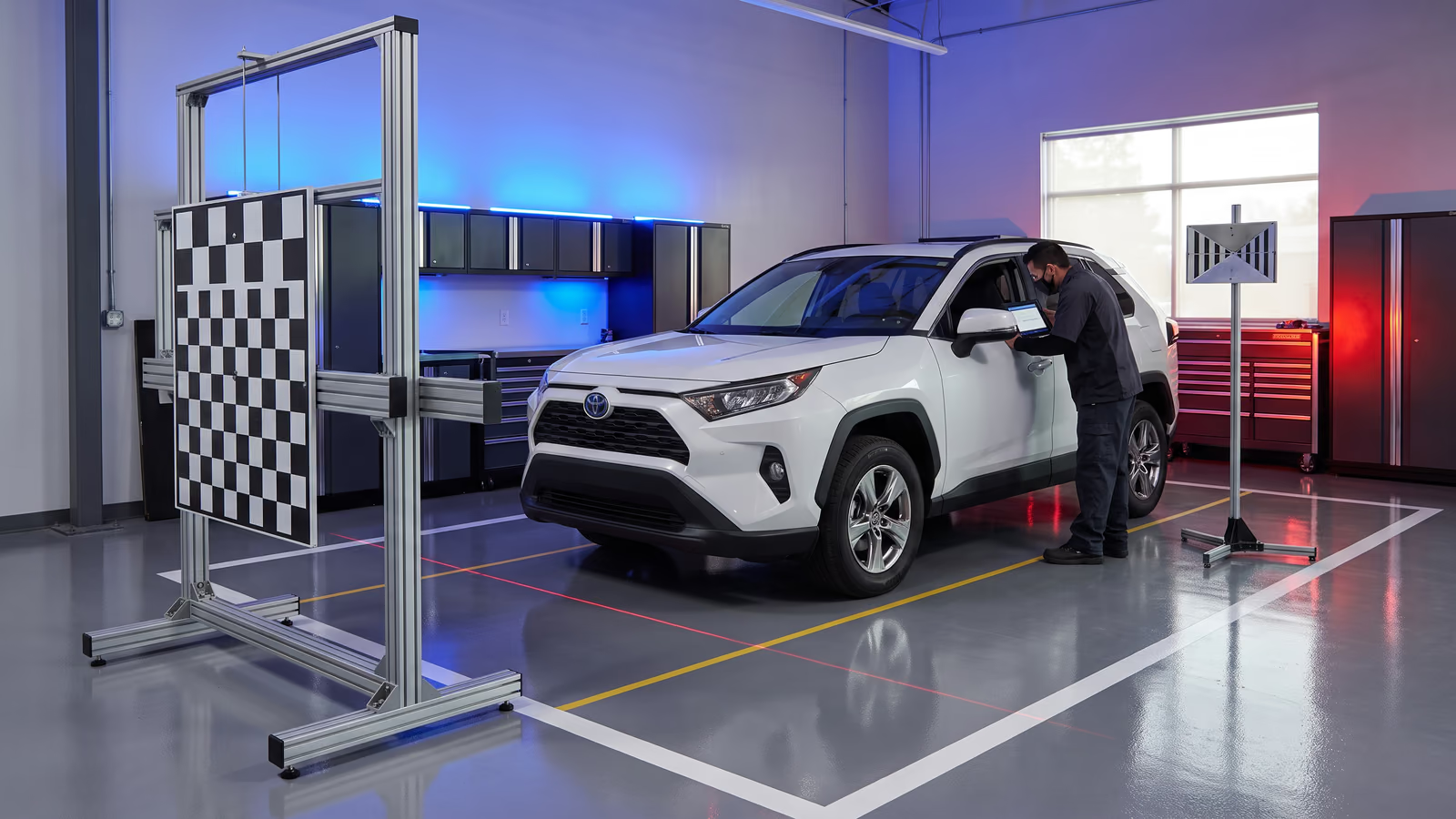
| How | Targets or reflectors placed at exact distances and heights in front of or beside the car, with a scan tool running the routine | The car is driven at set speeds while the scan tool monitors the sensor as it learns |
| Needs | Level floor, open space, controlled lighting, correct targets for the make | Clear lane lines, light traffic, good weather |
| Typical time | Often an hour or two per system, including setup | Varies with road and traffic conditions |
Both methods start the same way: tires at the right pressure, a full fuel tank or specified load, nothing heavy in the trunk, and often a wheel alignment first. If the car isn't set up to spec, the calibration will be off even if the scan tool reports a pass.
When Do You Need ADAS Calibration After a Collision?
The manufacturer's repair procedures decide, but these are the most common triggers after a crash:
- Bumper cover removed or replaced. Radar, parking sensors and blind-spot sensors often sit in or behind the bumper. Our bumper repair cost guide shows how sensors add to the bill.
- Sensor or bracket damage. Even a slightly bent radar bracket changes where the sensor points.
- Grille or emblem replacement on cars that hide a radar sensor behind the badge.
- Structural repair. Pulling or replacing rails, aprons or supports changes the mounting points sensors are aimed from.
- Wheel alignment changes. Forward cameras and radar are aimed relative to the direction the rear wheels point (the thrust line). Many manufacturers call for calibration after an alignment.
- Side mirror replacement on cars with blind-spot or surround-view cameras in the mirror.
- Windshield replacement. This is one of the most common triggers for forward camera calibration. Pro Collision Center doesn't replace auto glass, so if your windshield is replaced elsewhere, ask that shop for the calibration report.
Why pre- and post-repair scans matter
Many automakers publish position statements calling for a pre-repair scan and a post-repair scan on collision-damaged vehicles. The pre-scan finds fault codes the crash left behind, including some that never turn on a dash light. The post-scan confirms every module is talking and no new codes remain.
Calibration should end with a printed or digital report showing the system passed. Ask for a copy and keep it with your repair records.
Signs of a Bad ADAS Calibration
If a calibration was skipped or done wrong, you may notice:
- Lane keeping that nudges you toward a line, or pushes against you on a straight road
- Lane departure warnings when you're centered in the lane
- Adaptive cruise braking for no reason, or not seeing the car ahead
- Forward collision warnings with nothing in front of you
- A blind-spot light that stays on, or stays off when a car is beside you
- Messages like "front camera unavailable" or "radar blocked"
- Surround-view images that don't line up where they meet
- Parking sensors beeping constantly or not at all
Take the car back to the shop right away. Until it's fixed, don't rely on those features, especially at freeway speeds on I-80 or Business 80.
How Much Does ADAS Calibration Cost?
ADAS calibration cost depends on how many systems need it, which method the manufacturer requires, and your vehicle. The ranges below are typical national ranges per system and vary by make and model.
| Service | Typical range |
|---|---|
| Pre- or post-repair diagnostic scan | About $50 to $200 each |
| Forward camera calibration | About $200 to $600 |
| Front radar calibration | About $200 to $700 |
| Blind-spot radar calibration | About $150 to $500 |
| 360-degree camera calibration | About $200 to $600 |
| Parking sensors | Often a function check only; about $100 to $300 when coding or calibration is required |
A minor front-end repair might need one or two calibrations. A larger collision can need several, which can bring the calibration portion past $1,000. Luxury brands, EVs and vehicles that require dealer software usually sit at the higher end. The only real number for your car is the written estimate.
Does Insurance Cover ADAS Calibration?
Generally, yes. When calibration is required because of a covered collision repair, it's part of returning the car to pre-accident condition, so it belongs on the estimate. That's true whether the claim is through the other driver's liability coverage or your own collision coverage. Our guide on what collision insurance covers explains the difference.
Problems usually start when calibration is left off the first estimate. To avoid that:
- Ask the shop to list each calibration and scan as its own line item.
- Ask which manufacturer procedure requires it. A shop can send that documentation to the adjuster.
- If teardown shows a sensor or bracket was affected, make sure it's added as a supplement.
- Get the calibration report at pickup.
Missing calibrations are one of the common mistakes in auto repair estimates worth checking before you sign.
Frequently Asked Questions
Do I need ADAS calibration after a minor fender bender?
Often, yes. If the bumper cover was removed or replaced, or a sensor or bracket was touched, the manufacturer's procedures may require calibration even for small damage. A pre-repair scan and the repair procedures will show what your car needs.
How long does ADAS calibration take?
A single static calibration often takes an hour or two, including setup. Several systems, or a dynamic calibration that depends on road and weather conditions, can add time to the repair.
Do I need ADAS calibration after a wheel alignment?
Many manufacturers call for it. Forward cameras and radar are aimed using the car's thrust line, so changing the alignment can change where they point. Check your vehicle's repair information or ask the shop.
Is it safe to drive without ADAS calibration?
The car will drive, but safety features may react late, react to nothing, or not react at all. Don't rely on lane keeping, adaptive cruise or automatic braking until the systems are calibrated and verified.
Does ADAS calibration have to be done at a dealer?
No. A qualified shop with the correct targets, scan tools and manufacturer procedures can perform it. Some vehicles need dealer-level software for certain steps, and a good shop will tell you when that applies.
At Pro Collision Center, we build scans and ADAS calibration into the repair plan so your cameras, radar, blind-spot and parking sensors work the way they should when you drive away. Learn more about our ADAS calibration service, call (916) 885-1010 Monday through Friday, 7:00 am to 5:00 pm, or get a free accident repair estimate.
This article is general information, not legal or insurance advice. Check your policy or talk to a licensed professional about your situation.
Whether you need collision repair, paint restoration, or just a quick quote — we’re here to help. Fill out the form and a team member will reach out promptly to confirm your appointment.