Bumper Scratch Repair Costs for Scuffs and Paint Damage
A bumper mark can be paint transfer, a clear-coat scratch or a gouge into the plastic. Learn how depth sets the repair and how to compare spot and full quotes.
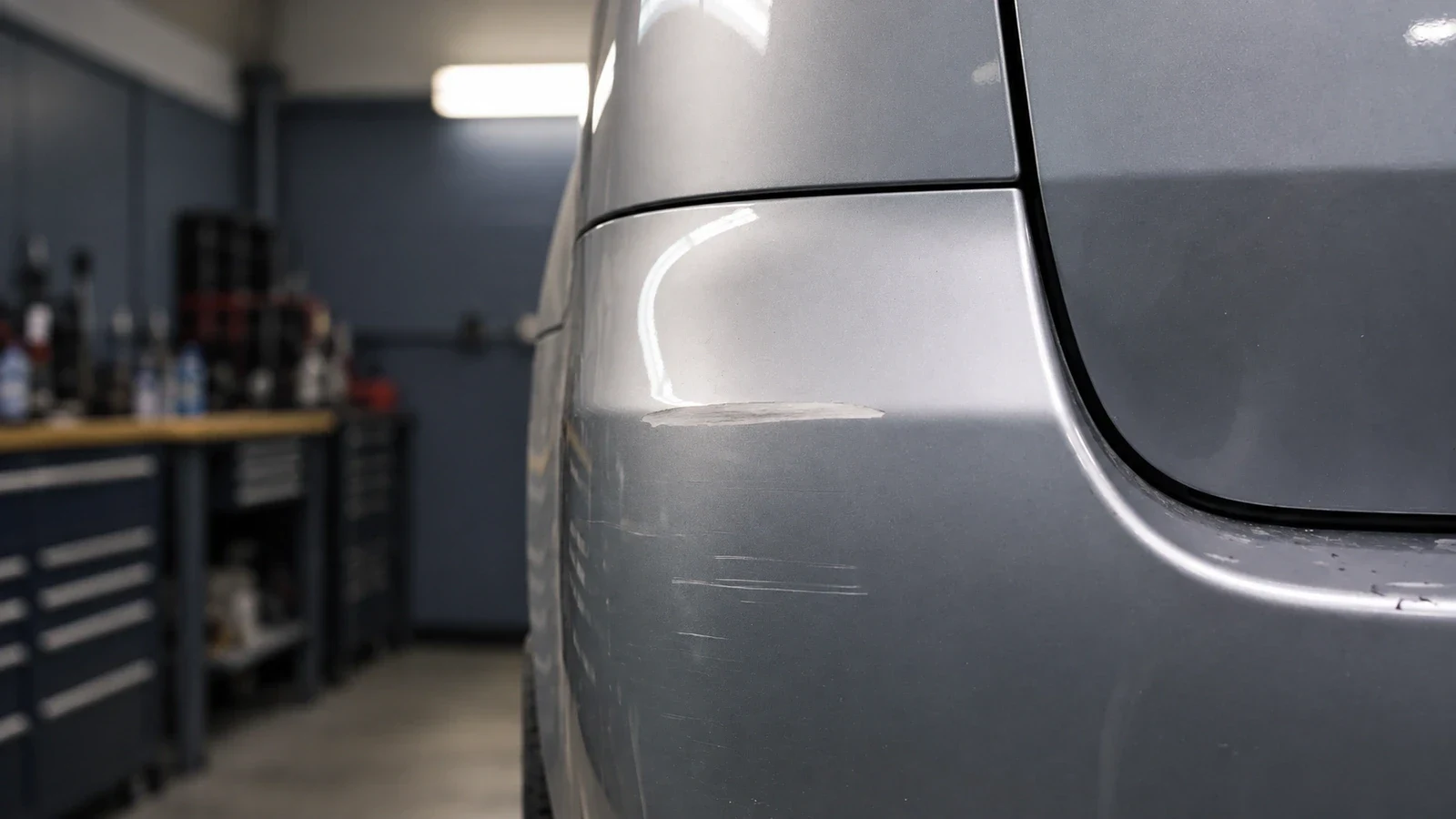
A pale mark on a bumper might be paint transferred from another object, a scratch in the clear coat or a gouge into the plastic. Those findings call for different work. Before comparing prices, establish what has been damaged and what appearance you expect after the repair.
What determines bumper scratch repair cost?
Depth, area and finish type matter more than whether the bumper is at the front or rear. A small gouge can require plastic repair and paint; a longer superficial transfer mark may need much less. Removal, access around trim and sensor restrictions also affect the scope.
Hypothetical Sacramento example, October 14, 2026: a 2021 Toyota Corolla with a rear-cover gouge, no crack or hidden damage, and a permitted repair/refinish area. Amounts are assumed calculation inputs, not local market rates or a Pro Collision Center quote.
The subtotal excludes tax, sensor procedures and adjacent damage. A front cover with a different coating system or equipment layout needs its own estimate; location alone does not justify a standard surcharge.
Which bumper scuffs can be corrected without repainting?
Transferred paint sits on top of the finish. Once it is removed appropriately, the underlying coating can be assessed for damage. A shallow clear-coat mark may improve through controlled correction if enough sound coating remains.
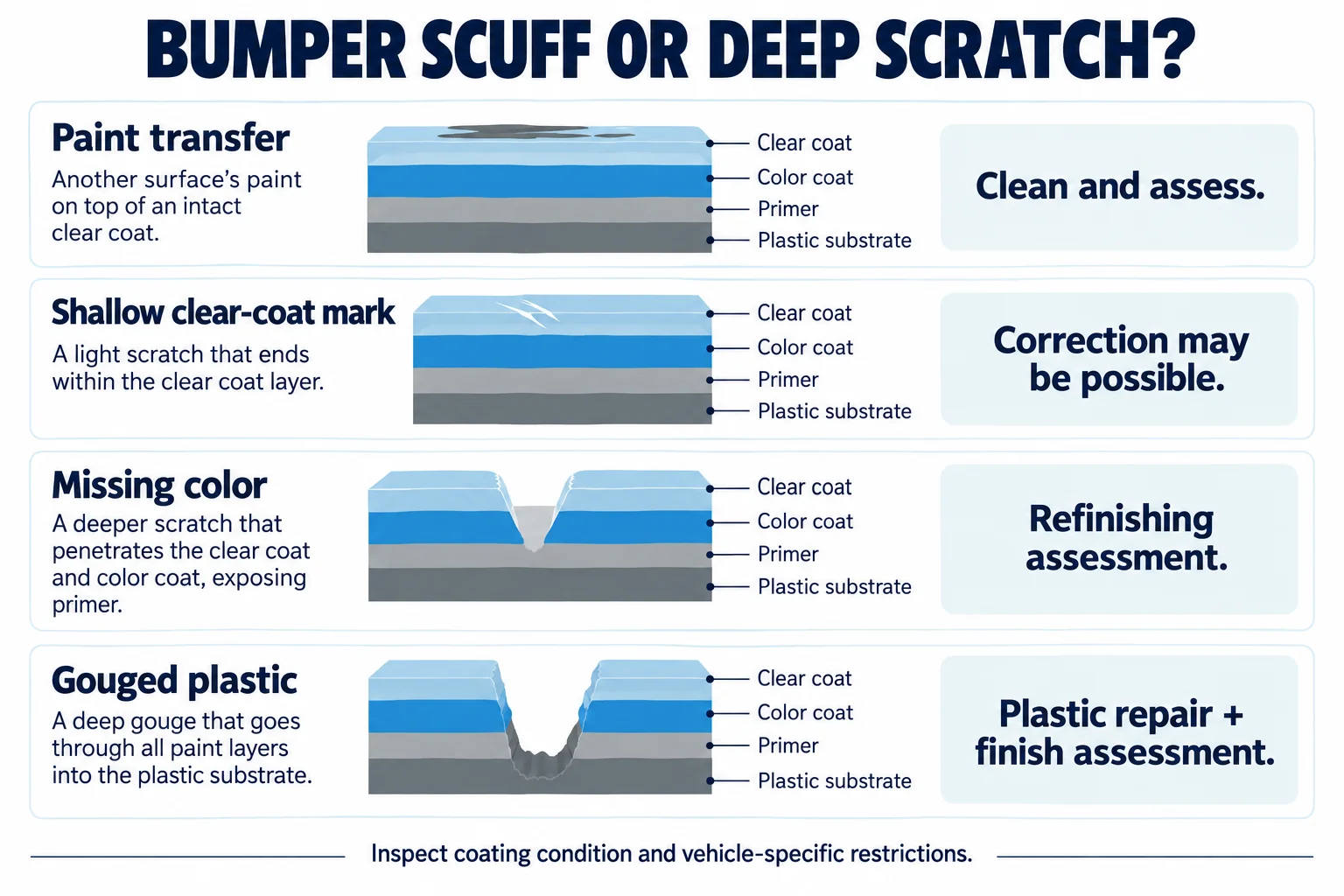
Polishing cannot replace missing paint. Color loss, exposed primer and gouged plastic need a different assessment. A simple fingernail test or a phone photograph is not enough to decide how much material can safely be removed.
If the surrounding finish is peeling, thin or previously repaired, chasing one small mark can worsen a larger problem. The goal is to preserve usable coating without turning a cosmetic correction into unnecessary refinishing.
When do paint chips or deeper scratches require refinishing?
Chips can leave broken coating edges and exposed material. Deeper scratches may require leveling and compatible plastic preparation before color and clear coat are restored. 3M's cosmetic bumper procedure describes a prepared repair surface rather than painting straight over the defect.
Metallic and pearl finishes can need more room for a controlled transition. That does not mean every scratch requires painting neighboring panels; the proposed boundary should follow the actual color and coating system.
How can you compare a spot repair quote with a full bumper repaint?
Ask each shop to describe the same finish standard and the work included. “Spot repair” can describe a localized repair area without explaining where the clear coat will end.
PPG's color procedure supports checking a blendable match before application. Ask about bumper-specific restrictions as well. A broader repaint is not automatically better if it adds excessive coating to a restricted area.
How can you get a bumper scratch assessment from Pro Collision Center?
Pro Collision Center offers scratch-depth assessment, paint correction and refinishing. Our bumper scratch repair in Sacramento starts with identifying whether the mark affects only the coating or the plastic beneath it.
- Photograph the bumper in daylight, including a wider view.
- Add close-ups without filters that hide the defect.
- Tell us about previous paintwork or protective coatings.
- Arrange inspection to confirm whether correction, touch-up or refinishing fits.
- Agree on the repair boundary and realistic appearance before work begins.
We can discuss color matching and the preparation needed for the chosen method. Request a free estimate with your vehicle details and photos.
Conclusion: How can you choose the right repair for a scratched bumper?
The appropriate repair follows the damaged layer and the condition of the surrounding finish. Our recommendation is to agree on the finish plan before comparing totals, especially when one quote promises a spot repair and another includes the whole cover.
A small mark deserves a proportionate repair, but the cheapest polishing offer is not suitable when coating is missing.
Sources
Whether you need collision repair, paint restoration, or just a quick quote — we’re here to help. Fill out the form and a team member will reach out promptly to confirm your appointment.