

Paintless Dent Repair vs Traditional Auto Body Repair: Which is Right for You?
Compare paintless dent repair and traditional auto body repair methods. Learn which option is right for your vehicle damage in Shingle Springs and El Dorado County.
When your vehicle has dents or damage, choosing between paintless dent repair and traditional auto body repair can be confusing. Both methods have their place, and understanding the differences helps you make the right choice for your situation.
At Pro Collision Center, we offer both paintless dent repair and traditional auto body repair methods. Our I-CAR certified technicians assess each situation to recommend the best approach for your vehicle. In this guide, we'll explain both methods and help you understand which is right for your damage.
What is Paintless Dent Repair?
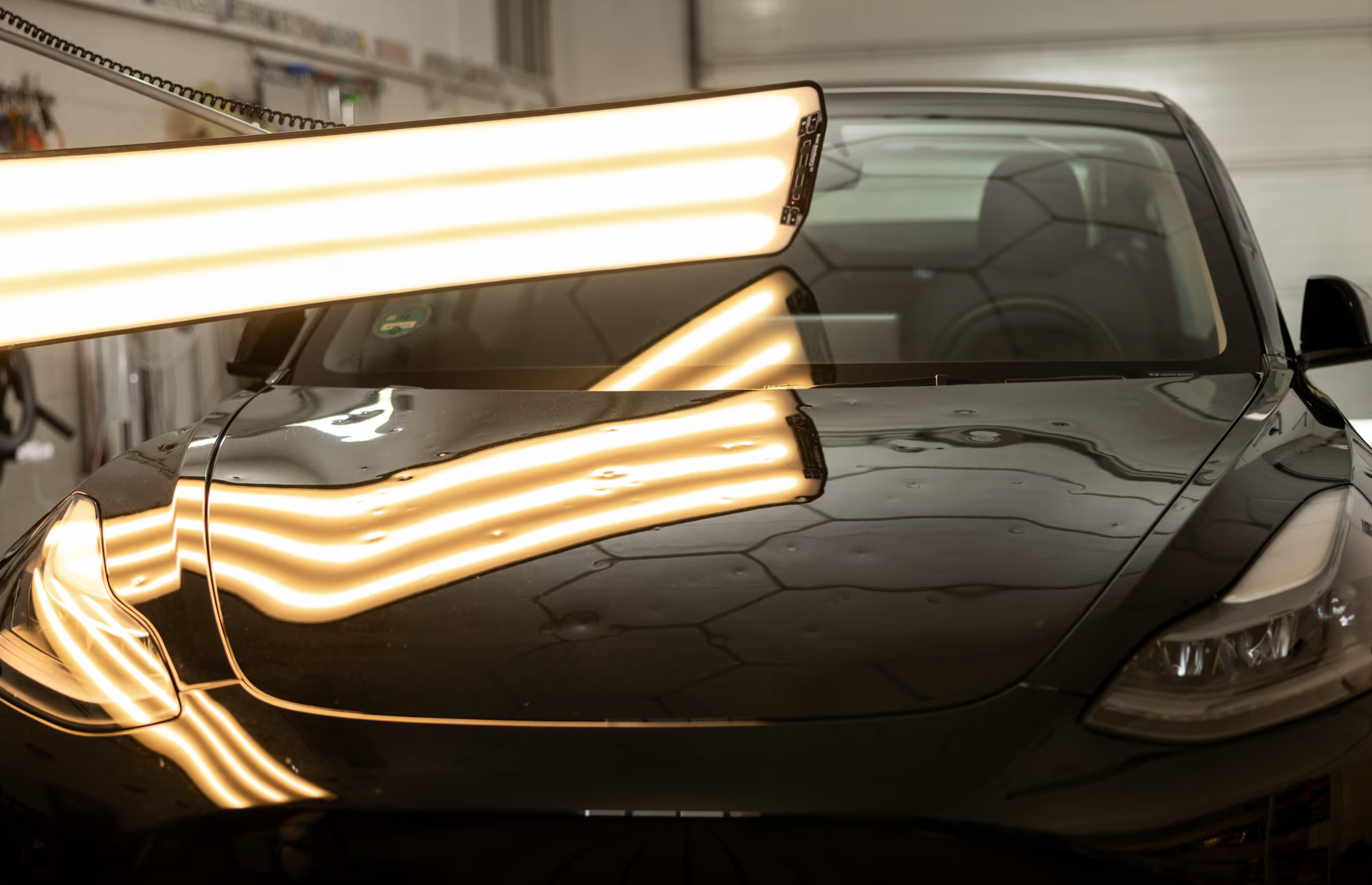
Paintless dent repair, or PDR, is a specialized technique that removes dents without repainting. Technicians use specialized tools to massage dents from behind the panel, restoring the original shape without affecting the paint.
PDR works best on dents where the paint is intact and the damage is accessible from behind the panel. This method preserves your vehicle's original paint and factory finish, which helps maintain value.
For Shingle Springs area drivers, PDR offers several advantages when appropriate for the damage type. The process is typically faster and less expensive than traditional repair, and it preserves your original paint.
How Paintless Dent Repair Works
PDR technicians use specialized tools to access the back of damaged panels. They carefully massage the metal back to its original shape, working from the edges of the dent toward the center.
The process requires skill and experience, as technicians must feel the metal's response and work gradually to avoid overcorrection. Our I-CAR certified technicians have extensive training in PDR techniques.
Because PDR doesn't involve painting, the repair is often completed faster than traditional methods. This means less time without your vehicle and lower overall costs.
When Paintless Dent Repair Works Best
PDR works best for specific types of damage:
- Small to medium dents with intact paint
- Dents accessible from behind the panel
- Damage without sharp creases or paint damage
- Hail damage on flat or gently curved surfaces
- Door dings and minor collision damage
If the paint is cracked, chipped, or damaged, PDR alone isn't sufficient. In these cases, traditional repair methods are necessary to restore both the panel shape and the paint finish.
What is Traditional Auto Body Repair?
Traditional auto body repair involves more extensive work, including panel repair or replacement, body filler application, and repainting. This method is necessary when damage is too severe for PDR or when paint is damaged.
Traditional repair restores your vehicle to its pre-accident condition through a comprehensive process. Our state-of-the-art facility includes advanced equipment for precise repairs and color matching.
For El Dorado County drivers, traditional repair ensures complete restoration when PDR isn't appropriate. Our I-CAR certified technicians use industry-leading techniques to achieve factory-quality results.
The Traditional Repair Process
Traditional repair involves several steps:
- Assessment: Detailed inspection to identify all damage
- Disassembly: Removing damaged parts and accessing repair areas
- Panel repair or replacement: Restoring or replacing damaged panels
- Body filler: Smoothing surfaces for painting
- Primer and paint: Matching your vehicle's original color
- Clear coat: Protecting the finish
- Reassembly: Reinstalling all components
This comprehensive process ensures your vehicle is fully restored to its pre-accident condition. Our lifetime warranty covers all traditional repairs.
When Traditional Repair is Necessary
Traditional repair is necessary when:
- Paint is cracked, chipped, or damaged
- Damage is too severe for PDR
- Panels have sharp creases or folds
- Structural damage requires panel replacement
- Multiple panels are damaged
Our technicians assess each situation to determine the best approach. When traditional repair is necessary, we ensure complete restoration with factory-quality results.
Not sure which method is right for your damage? Our I-CAR certified technicians can assess your vehicle and recommend the best approach. Contact Pro Collision Center today for your free estimate.
Comparing Paintless Dent Repair vs Traditional Repair
Understanding the differences between PDR and traditional repair helps you make informed decisions about your vehicle's repairs.
Cost Comparison
PDR is typically less expensive than traditional repair because it doesn't involve painting or extensive labor. However, cost depends on the specific damage and what's needed to restore your vehicle.
Traditional repair costs more because it involves more extensive work, including painting and potentially panel replacement. The comprehensive nature of traditional repair ensures complete restoration.
Our $1000 deductible assistance program applies to both PDR and traditional repairs, helping reduce your out-of-pocket costs regardless of which method is used.
Time Comparison
PDR is typically faster than traditional repair. Simple PDR jobs can often be completed in a few hours, while traditional repairs may take several days or weeks depending on the extent of damage.
Traditional repair takes longer because it involves multiple steps, including paint drying times. Our team works efficiently to minimize repair time while ensuring quality results.
We keep you informed throughout the process and provide realistic timelines based on your specific damage.
Quality and Results
Both methods can achieve excellent results when applied appropriately. PDR preserves your original paint, which helps maintain value, while traditional repair ensures complete restoration when damage is more severe.
Our I-CAR certified technicians have expertise in both methods and choose the approach that provides the best results for your specific situation.
Factors That Determine the Right Method
Several factors determine whether PDR or traditional repair is right for your damage.
Damage Severity
Minor dents with intact paint are good candidates for PDR. More severe damage with paint damage or structural issues requires traditional repair.
Our technicians assess damage severity during the estimate process and recommend the appropriate method based on what's needed to restore your vehicle.
Paint Condition
If your paint is intact and undamaged, PDR may be an option. If paint is cracked, chipped, or damaged, traditional repair is necessary to restore both the panel and the finish.
We inspect paint condition carefully, as paint damage isn't always immediately visible. Our detailed assessments ensure we identify all damage and recommend the right approach.
Panel Accessibility
PDR requires access to the back of damaged panels. If access isn't possible or damage is in hard-to-reach areas, traditional repair may be more appropriate.
Our technicians evaluate panel accessibility during assessment. When PDR isn't possible due to access limitations, we recommend traditional repair.
Vehicle Value
For newer vehicles or vehicles with high value, preserving original paint through PDR can help maintain resale value. However, when damage is too severe, traditional repair ensures complete restoration.
We consider your vehicle's value and your goals when recommending repair methods. Our goal is to provide the best solution for your specific situation.
Hybrid Approaches: Combining Both Methods
Sometimes, the best approach combines both PDR and traditional repair methods. This hybrid approach uses each method where it's most effective.
For example, if your vehicle has multiple dents, some may be suitable for PDR while others require traditional repair. Our technicians assess each area individually and use the most appropriate method for each.
This approach maximizes efficiency and cost-effectiveness while ensuring complete restoration. We explain our recommendations clearly so you understand the approach.
Multi-Panel Damage
When multiple panels are damaged, we assess each panel individually. Some panels may be suitable for PDR, while others require traditional repair.
This approach ensures each area receives the most appropriate treatment while maintaining overall repair efficiency.
Complex Damage Scenarios
Complex damage scenarios often benefit from hybrid approaches. Our technicians have the expertise to determine when combining methods provides the best results.
We explain our recommendations and the reasoning behind them, ensuring you understand the approach and feel confident in the repair plan.
Benefits of Choosing Pro Collision Center
When you need collision repair in Shingle Springs or El Dorado County, Pro Collision Center offers expertise in both PDR and traditional repair:
- I-CAR certified technicians: Highest level of training in both methods
- Expert assessment: We recommend the best method for your specific damage
- State-of-the-art facility: Advanced equipment for both PDR and traditional repair
- $1000 deductible assistance: Reduce your out-of-pocket costs
- Free towing: No additional cost to get your vehicle to our shop
- Lifetime warranty: We stand behind all repairs
We work with all major insurance companies and handle all coordination. Our goal is to provide the best repair solution for your specific situation.
Ready to determine the right repair method for your vehicle? Contact Pro Collision Center today for your free estimate and expert assessment.
Common Questions About Repair Methods
Can paintless dent repair fix all types of dents?
No, PDR works best for minor to moderate dents with intact paint. Severe damage, paint damage, or damage with sharp creases typically requires traditional repair.
Will paintless dent repair affect my vehicle's value?
PDR can actually help maintain value by preserving your original paint. However, when damage is too severe for PDR, traditional repair ensures complete restoration and maintains value through quality work.
How long does paintless dent repair take?
Simple PDR jobs can often be completed in a few hours, while more complex jobs may take a day. Traditional repairs typically take several days to weeks depending on damage severity.
Is paintless dent repair covered by insurance?
Yes, PDR is typically covered by insurance when it's the appropriate method for the damage. We work with all major insurance companies and handle all coordination.
Can you combine paintless dent repair and traditional repair?
Yes, we often use hybrid approaches that combine both methods. This ensures each area receives the most appropriate treatment while maximizing efficiency and cost-effectiveness.
Conclusion
Choosing between paintless dent repair and traditional auto body repair depends on your specific damage. PDR works well for minor dents with intact paint, while traditional repair is necessary for more severe damage or when paint is damaged.
At Pro Collision Center, our I-CAR certified technicians assess each situation and recommend the best approach. We offer both methods and use hybrid approaches when appropriate. Combined with $1000 deductible assistance, free towing, and our lifetime warranty, you get exceptional value regardless of which method is used.
Need help determining the right repair method? Contact Pro Collision Center today for your free estimate and expert assessment.
Whether you need collision repair, paint restoration, or just a quick quote — we’re here to help. Fill out the form and a team member will reach out promptly to confirm your appointment.

